Android Privacy Settings to Change Immediately
Android Privacy Settings Most People Should Change Immediately
Most Android phones are not “unsafe” out of the box, but they are usually set up for convenience first. That means apps can ask for broad permissions, Google services can save activity history, websites can request camera or location access, and notifications can reveal private messages on the lock screen. None of this means you need to panic. It does mean you should spend a few minutes tightening your Android privacy settings.
The best approach is simple: reduce access where it’s not needed, keep security protections turned on, and review the settings that quietly collect location, activity, notification, and app usage data. Android gives users a lot of control, but those controls are spread across device settings, app settings, Google account settings, Google Play, Chrome, and sometimes manufacturer-specific menus.
That scattered layout is the real problem. A privacy beginner may turn off one setting and assume everything is fixed. In reality, Android privacy works in layers. App permissions control what individual apps can access. Google privacy settings control what your Google Account saves. Browser settings control what websites can access. Security settings protect the phone if it’s lost, stolen, or attacked.
This guide walks through the Android privacy settings most people should change immediately, with practical explanations for families, beginners, and everyday users who want better mobile privacy protection without breaking useful phone features.
Why Android privacy settings matter more than most people think
Your Android phone knows more about your daily life than almost any other device you own. It may contain your location history, private messages, family photos, banking apps, health apps, school apps, delivery addresses, saved passwords, search history, voice searches, work email, and personal contacts.
That’s why Android privacy is not only about “hiding from ads.” It’s also about reducing accidental exposure. A weather app does not need your contacts. A flashlight app does not need your location. A random game does not need microphone access. A shopping app may not need to track your precise location in the background.
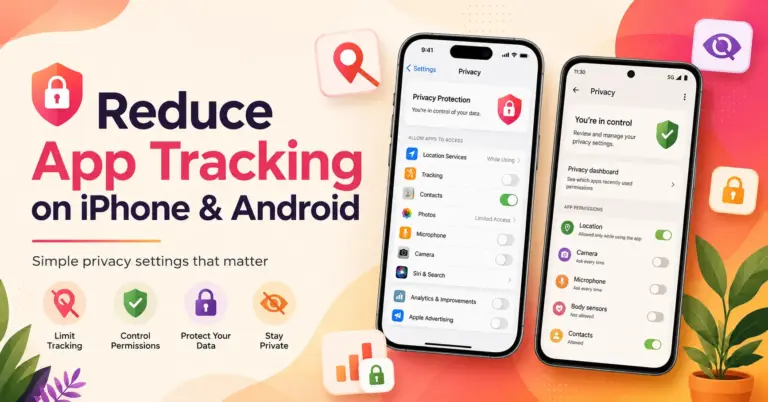
Android’s Permission Manager lets users review permission categories and change which apps can access them. Google’s official Android help explains that users can open Settings → Security & Privacy → Privacy → Permission manager, choose a permission type, then change app access from there. Some menu names vary by phone brand, but the Permission Manager is the right starting point for most users. (Google Help)
The goal is not to turn off everything. The goal is to apply the “least privilege” principle: every app should only have the access it genuinely needs.
The quick Android privacy reset checklist
Start with these settings first:
| Setting | Recommended action | Why it matters |
|---|---|---|
| Location permissions | Change most apps to “Allow only while using” or “Ask every time” | Reduces background location tracking |
| Camera and microphone | Remove access from apps that don’t clearly need it | Prevents unnecessary sensitive access |
| Contacts, SMS, call logs | Allow only trusted communication or productivity apps | Protects personal relationships and messages |
| Privacy Dashboard | Check recent sensitive access | Shows which apps used location, camera, and microphone |
| Web & App Activity | Review or pause if you don’t want Google saving broad activity | Limits account-level activity history |
| Location History | Review or pause if you don’t want timeline-style location storage | Reduces stored location history |
| Personalized ads | Review My Ad Center settings | Reduces ad personalization based on account signals |
| Lock screen notifications | Hide sensitive content | Prevents private messages from showing publicly |
| Play Protect | Keep scanning on | Helps detect harmful apps |
| Find Hub | Turn on before losing the phone | Enables locate, secure, and erase options |
Android privacy should be adjusted in this order: permissions first, account activity second, lock screen and browser settings third, then security protections. This order gives the biggest practical improvement without making the phone frustrating to use.
1. Review Android app permissions first
App permissions are the most important Android privacy settings because they control what installed apps can access directly. Permissions include location, camera, microphone, contacts, calendar, nearby devices, photos, notifications, SMS, and call logs.
Open:
Settings → Security & Privacy → Privacy → Permission manager
On some phones, try:
Settings → Privacy → Permission manager
or search “Permission manager” inside Settings.
Google’s Android documentation says users can choose a permission type, see which apps are allowed or denied, and change each app’s permission setting. For location, camera, and microphone, Android may offer options such as allowing access only while the app is in use, asking every time, or denying access. (Google Help)
Location permissions
Location is usually the biggest privacy leak. Apps use it for maps, ride sharing, delivery, weather, fitness tracking, local search, family safety, and nearby device features. But many apps request location because it improves analytics, ads, fraud checks, or local personalization.
Use this rule:
| App type | Suggested location setting |
|---|---|
| Maps, navigation, ride sharing | Allow while using |
| Weather | Approximate location or city-level location if available |
| Food delivery | Allow while using |
| Social media | Ask every time or deny |
| Shopping apps | Deny unless needed for store pickup |
| Games | Deny |
| Camera | Deny location unless you want photo geotags |
| Family safety apps | Allow as needed, but review carefully |
Avoid giving most apps “Allow all the time.” Background location should be reserved for apps where continuous location is the feature, such as family safety, fitness tracking, lost-device tools, or work apps that genuinely require it.
Also check whether the app needs precise location. Many apps work fine with approximate location. A weather app needs your city; it does not need your exact street.
Camera and microphone permissions
Camera and microphone access are highly sensitive because they connect to your physical surroundings. Android shows indicators when the camera or microphone is being used, and Android’s privacy page notes that users can toggle camera and microphone access at the system level. (Android)
Review these permissions closely:
| Permission | Usually okay for | Be careful with |
|---|---|---|
| Camera | Camera apps, video calling, banking ID verification, QR scanning | Games, unknown social apps, random utilities |
| Microphone | Calling apps, voice notes, video meetings, voice assistants | Photo editors, games, shopping apps |
| Nearby devices | Earbuds, watches, Bluetooth accessories | Apps that don’t connect to hardware |
A practical test: if you can’t explain why an app needs the camera or microphone in one sentence, deny it. You can always allow it later when the app asks during a real task.
Contacts, SMS, call logs, and calendar access
Contacts, SMS, and call logs deserve stricter treatment than many users give them. Contact access can expose not just your information, but other people’s names, phone numbers, and emails. SMS access can expose verification codes, private conversations, and account alerts. Call log access can reveal who you talk to and when.
Use this rule:
| Permission | Recommended approach |
|---|---|
| Contacts | Allow only for communication, email, messaging, or trusted productivity apps |
| SMS | Deny unless the app is your messaging app or has a clear need |
| Call logs | Deny unless it is a dialer, spam protection, or work phone app |
| Calendar | Allow only for calendar, booking, travel, or productivity apps |
Families should be especially careful with kids’ phones. Games, social apps, and free utility apps should not casually receive contact access.
2. Use the Android Privacy Dashboard
The Privacy Dashboard is useful because it shows recent access to sensitive permissions. Instead of guessing which apps used your location, camera, or microphone, you can check the timeline.
Google’s Android help explains that users can open Settings → Security and Privacy or Privacy → Privacy dashboard, then select a permission to see apps that accessed it and update permissions from the same area. (Google Help)
Use the dashboard like an audit log:
- Open Privacy Dashboard.
- Check Location.
- Look for apps that accessed location when you weren’t actively using them.
- Check Camera and Microphone.
- Remove permissions from anything suspicious or unnecessary.
What should concern you?
- A game checking location repeatedly.
- A shopping app using location in the background.
- A rarely used app accessing the microphone.
- A photo editor requesting contacts.
- An app you don’t recognize appearing in sensitive permission history.
The Privacy Dashboard is not only for advanced users. It’s one of the easiest ways for privacy beginners to see what’s actually happening.
3. Stop unused apps from keeping old permissions
Many people install apps for one-time use: a parking app, event app, coupon app, hotel app, QR scanner, school app, or travel app. Months later, those apps may still have permissions.
Android and Google Play Protect include features that can remove permissions or pause activity for unused apps. Google’s Play Protect help says unused-app settings can remove permissions, pause app activity, and stop unused apps from running in the background, depending on the device and app. (Google Help)
Check:
Settings → Apps → See all apps → Choose app → Unused app settings
Turn on options such as:
- Remove permissions if app is unused.
- Pause app activity if unused.
- Remove temporary files if available.
Better yet, uninstall apps you don’t use. Removing an app is stronger than limiting it. If you need it again, reinstall it from a trusted source.
4. Limit Google privacy settings on Android
Android privacy settings and Google privacy settings are related, but they are not the same thing.
Android settings control the phone and apps. Google privacy settings control what your Google Account saves across Google services. That may include Search, Chrome activity, Maps activity, YouTube history, app activity, voice activity, and location-related history, depending on your settings.
To review Google privacy settings on Android:
Settings → Google → Manage your Google Account → Data & privacy
From there, review activity controls.
Web & App Activity
Web & App Activity can save activity from Google sites, apps, and services to your Google Account. Google’s help page explains that Android users can open Google Account settings, go to Data & privacy, then control Web & App Activity under history settings. (Google Help)
Consider pausing Web & App Activity if you don’t want Google saving broad activity for personalization. If you keep it on, review auto-delete options and remove older activity you don’t need.
Good privacy setting for most beginners:
- Pause Web & App Activity, or
- Keep it on with auto-delete enabled, depending on how much personalization you want.
Trade-off: pausing activity may reduce personalized recommendations, faster searches, and continuity across Google services.
Location History
Location History is different from app-level location permission. An app may have location access, while your Google Account may also save location history if that setting is enabled.
Review:
Google Account → Data & privacy → History settings → Location History
For many users, pausing Location History is a sensible privacy move. Maps and navigation can still work when you allow location access during use, but a long-term timeline of places may not be necessary for everyone.
Families should discuss this setting openly. Location sharing can be useful for safety, but silent location history can feel invasive if people don’t understand it.
YouTube History
YouTube History affects recommendations and watch history. It is less sensitive than precise location, but it can reveal interests, health questions, religious content, political content, family concerns, or private learning topics.
Review:
Google Account → Data & privacy → YouTube History
You can pause it, delete old history, or use auto-delete.
5. Adjust personalized ads in My Ad Center
Ad personalization is not the same as app permission tracking, but it affects how your data is used for ads across Google services.
Google’s My Ad Center help explains that users can turn personalized ads on or off in supported Google experiences, including through YouTube settings that link to My Ad Center. (Google Help)
Open:
Google Account → Data & privacy → Personalized ads → My Ad Center
Review:
- Whether personalized ads are on.
- Topics used for ad personalization.
- Brands or sensitive categories.
- Recent activity used for ad relevance.
Turning off personalized ads does not remove ads. It usually means ads become less tailored. For privacy beginners, that trade-off is often worth it.
This setting also matters for families. If a shared tablet or child-accessible device uses an adult Google account, ad personalization can become messy. Use separate accounts and supervised profiles where appropriate.
6. Hide sensitive lock screen notifications
Lock screen notifications are one of the most overlooked privacy risks. A phone sitting on a desk can reveal text messages, bank alerts, delivery codes, calendar details, school updates, and private app notifications.
Google’s Android notification help explains that users can go to Settings → Notifications, then under privacy choose lock screen notification settings and turn sensitive content on or off. (Google Help)
Recommended setting:
Show notifications, but hide sensitive content
This keeps the phone useful without exposing message previews.
For higher privacy:
Don’t show notifications on lock screen
Use this for work phones, shared homes, school environments, or anyone who receives sensitive banking, legal, medical, or business messages.
Also review individual app notification settings. Messaging apps, email apps, banking apps, and authenticator apps deserve stricter lock screen treatment than weather or delivery apps.
7. Check Chrome and browser site permissions
Many Android users review app permissions but forget browser permissions. Websites can request location, camera, microphone, notifications, pop-ups, and other access through Chrome or another browser.
Google’s Chrome help explains that Android users can change site camera and microphone permissions in Chrome by opening Chrome settings, going to Site settings, then choosing Microphone or Camera. (Google Help)
Check in Chrome:
Chrome → Settings → Site settings
Review:
- Location
- Camera
- Microphone
- Notifications
- Pop-ups and redirects
- Third-party cookies, if available
- Background sync
- Automatic downloads
Deny notification permissions for websites unless you genuinely need them. Many spammy websites abuse browser notifications to push misleading alerts. If a site says “tap Allow to continue,” be skeptical.
For families, browser notification cleanup is especially important. Children may allow notifications without understanding what they did.
8. Keep Google Play Protect on and check app safety
Google Play Protect is Android’s built-in app safety layer. Google says Play Protect checks apps and devices for harmful behavior, scans apps from Google Play before download, checks for potentially harmful apps from other sources, warns users, and may deactivate or remove harmful apps. (Google Help)
Check:
Google Play Store → Profile icon → Play Protect
Make sure scanning is on.
Also check the Data safety section before installing new apps. Google Play’s help explains that the Data safety section lets users review information developers provide about app privacy and security practices before installation. (Google Help)
Before installing an app, ask:
- Who made it?
- Does it have a real developer website?
- Does it request sensitive permissions?
- Does the permission request match the app’s purpose?
- Are there recent reviews mentioning privacy, pop-ups, or strange behavior?
- Does a simpler or more trusted app already do the job?
Avoid sideloading APKs unless you understand the risk. Sideloaded apps can be legitimate, but they bypass some normal store review signals and are common in malware distribution.
9. Turn on Find Hub before the phone is lost
Find Hub, previously known to many users as Find My Device, helps locate, secure, and erase a lost Android device. Google’s Android help says Find Hub can ring, locate, secure, and erase a lost device when the feature is turned on. (Google Help)
Check:
Settings → Security → Find Hub
Turn on:
Allow device to be located
Google’s lost-device help explains that users can use another Android device or browser to sign in, select the lost device, view location information, and use options such as locating, securing, or erasing the device. (Google Help)
This is a privacy setting because a lost phone is one of the fastest ways private data becomes exposed. A strong screen lock plus Find Hub gives you a recovery path.
Also confirm:
- Screen lock is enabled.
- Biometrics are backed by a strong PIN.
- Recovery email and phone are updated.
- Important photos and files are backed up securely.
10. Strengthen sign-in with passkeys or 2-Step Verification
Privacy and security overlap. If someone gets into your Google Account, they may access Gmail, Drive, Photos, Maps activity, saved passwords, contacts, app backups, and device location tools.
Google says passkeys can be used to sign in instead of passwords, and biometric data used for fingerprint or face unlock stays on the device rather than being shared with Google. (Google Help)
Review:
Google Account → Security
Turn on or review:
- Passkeys
- 2-Step Verification
- Recovery phone
- Recovery email
- Recent security activity
- Your devices
- Third-party app access
Google’s 2-Step Verification help explains that passkeys verify possession of the device and can replace the second authentication step in that context. (Google Help)
For most users, the best setup is:
- A strong screen lock.
- Passkey for Google sign-in.
- 2-Step Verification enabled.
- Backup codes stored safely.
- Recovery methods updated.
Do not rely only on SMS codes if you can avoid it. Authenticator apps, passkeys, and security keys are usually stronger options.
11. Use Private DNS carefully
Private DNS can improve privacy by encrypting DNS queries where supported. Google’s Android help says Android uses Private DNS by default with networks that support it and recommends keeping Private DNS turned on. Users can find it under Settings → Network & internet → Private DNS, though menu paths vary by device. (Google Help)
Recommended beginner setting:
Private DNS: Automatic
Advanced users may choose a trusted provider hostname, especially if they want filtering or family-safe DNS. However, don’t enter random DNS providers from social media comments. DNS providers can affect browsing reliability and may see domain lookup patterns.
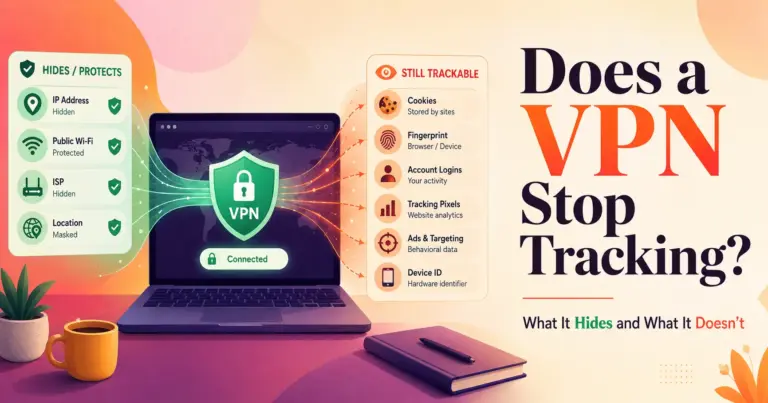
Private DNS is not a full VPN. It does not hide all traffic, does not make you anonymous, and does not replace safe browsing habits. Think of it as one network privacy layer, not a magic shield.
12. Review photo, file, and notification permissions
Modern Android versions give more granular control over photos and media than older versions, but many users still approve file access too casually.
Watch for apps asking access to:
- All photos and videos
- Music and audio
- Files and documents
- Notifications
- Nearby devices
- Physical activity
- Health-related sensors
A photo editor may need selected photos. It probably does not need every file on your phone. A shopping app may want notifications for delivery updates, but it does not need constant promotional alerts. A fitness app may need physical activity data, but a game probably does not.
Notification permission matters because notifications can become a tracking and manipulation channel. Too many apps use notifications to pull users back into ads, offers, and engagement loops. Deny notifications unless the app gives you timely value.
13. Family privacy settings parents should check
Families need a slightly different Android privacy strategy. The issue is not only tracking. It is also accidental sharing, unsafe apps, in-app purchases, location exposure, inappropriate notifications, and children approving permissions without understanding them.
For a child’s Android device, review:
- Google Family Link or parental controls.
- App installation approvals.
- Location sharing.
- YouTube and browser history settings.
- Lock screen notification previews.
- Contacts and SMS permissions.
- Camera and microphone access for games.
- Unknown app installation.
- Google Play purchase approval.
- Chrome site notifications.
Use separate child accounts instead of sharing a parent account. A shared account mixes search history, recommendations, saved passwords, photos, and ad signals.
Also explain permissions in plain language. A child can understand this rule: “Apps should only get what they need to work.” That one sentence helps prevent many bad approvals.
14. Android vs iPhone privacy: what’s different?
Android and iPhone both offer permission controls, location controls, camera and microphone indicators, account privacy settings, and app store privacy information. The practical difference is where the controls live and how much the ecosystem depends on Google account services.
On iPhone, many users think first about App Tracking Transparency, iCloud settings, Safari privacy, and Apple ID security. On Android, users should think in four layers:
- Android device permissions.
- Google Account activity settings.
- Google Play app safety.
- Browser and website permissions.
That does not mean Android is automatically less private. It means Android privacy takes a little more active review because phone makers, Google services, app stores, browsers, and third-party apps can all add their own settings.
For a balanced mobile privacy cluster, an Android guide should connect naturally to iPhone app tracking, mobile security basics, browser privacy, password safety, and family device setup.
15. Common mistakes people make with Android privacy settings
Mistake 1: Denying everything at once
This sounds private, but it can break important features. Maps needs location. Banking apps may need camera access for check deposits or ID verification. Video calling apps need camera and microphone. The better approach is controlled access, not blind denial.
Mistake 2: Allowing location “all the time”
Most apps don’t need background location. Use “only while using” whenever possible.
Mistake 3: Forgetting old apps
Old apps are a quiet privacy risk. Uninstall them or let Android remove unused permissions.
Mistake 4: Ignoring Google Account settings
Changing Android permissions does not automatically pause Web & App Activity, YouTube History, or Location History. Review both device and account settings.
Mistake 5: Leaving message previews on the lock screen
This is simple to fix and prevents a lot of accidental exposure.
Mistake 6: Installing too many utility apps
Flashlight apps, QR scanners, file cleaners, battery boosters, and free VPNs deserve skepticism. Android already includes many built-in tools, and unnecessary utility apps often ask for more access than they need.
Mistake 7: Thinking privacy settings replace security habits
Privacy settings help, but they don’t stop phishing, weak passwords, scam calls, unsafe APKs, or account recovery attacks. Keep security protections active.
16. Monthly Android privacy maintenance routine
A good privacy routine takes 10 minutes per month.
Step 1: Check Privacy Dashboard
Look for unexpected camera, microphone, or location access.
Step 2: Review Permission Manager
Focus on location, camera, microphone, contacts, SMS, call logs, calendar, and files.
Step 3: Delete unused apps
If you haven’t used an app in months, remove it.
Step 4: Check Google Account activity
Review Web & App Activity, Location History, YouTube History, and ad personalization.
Step 5: Review Play Protect
Open Play Protect and confirm scanning is active.
Step 6: Check lock screen privacy
Make sure sensitive notifications stay hidden.
Step 7: Review Chrome site permissions
Remove notification, camera, microphone, and location permissions from websites you don’t trust.
Step 8: Check account security
Review passkeys, 2-Step Verification, recovery methods, and signed-in devices.
This routine is more realistic than extreme privacy advice. Most people won’t harden every setting weekly, but they can do a monthly review.
Summary: the highest-impact settings to change first
If you only have five minutes, change these Android privacy settings first:
- Open Permission Manager and restrict location, camera, microphone, contacts, SMS, and call log permissions.
- Change most location access to “Allow only while using.”
- Use Privacy Dashboard to check recent sensitive access.
- Hide sensitive lock screen notifications.
- Review Google Account activity controls.
- Turn off or limit personalized ads if you prefer less ad targeting.
- Keep Play Protect enabled.
- Turn on Find Hub.
- Set up passkeys or 2-Step Verification.
- Delete apps you no longer use.
Android privacy does not require becoming a cybersecurity expert. It requires a few careful choices. Start with the apps that know where you are, see what you see, hear what you say, or access the people you know. Then review what your Google Account saves. After that, tighten browser permissions, notifications, and lost-device protection.
That layered approach gives you a phone that still works normally, but shares less by default.
9. FAQ Section
What are the most important Android privacy settings to change?
Start with app permissions, especially location, camera, microphone, contacts, SMS, call logs, and files. Then review Google Account activity controls, personalized ads, lock screen notifications, Chrome site permissions, Play Protect, Find Hub, and 2-Step Verification.
Should I turn off all Android app permissions?
No. Some permissions are necessary. Maps needs location, video calling apps need camera and microphone, and banking apps may need camera access for verification. The better rule is to allow permissions only when they match the app’s real purpose.
Is Google privacy settings Android control the same as app permissions?
No. Android app permissions control what installed apps can access on your device. Google privacy settings control what your Google Account may save across Google services, such as Web & App Activity, Location History, and YouTube History.
How do I stop location tracking on Android?
Review Settings → Privacy → Permission manager → Location and change most apps to “Allow only while using,” “Ask every time,” or “Deny.” Then review Google Account Location History separately under Google Account → Data & privacy.
Should I turn off personalized ads on Android?
Turn off personalized ads if you don’t want ads tailored using Google account signals. You may still see ads, but they should be less personalized. Review this in My Ad Center through your Google Account privacy settings.
Is Play Protect enough for Android security?
Play Protect is an important built-in protection and should stay on. It helps scan for harmful app behavior, but it does not replace careful app installation, strong passwords, 2-Step Verification, safe browsing, and avoiding suspicious APK files.
What Android privacy settings should parents check first?
Parents should review app installation approvals, location sharing, browser notifications, YouTube history, lock screen previews, camera and microphone permissions, contacts access, in-app purchases, and child account supervision through Family Link or parental controls.
Does Private DNS make Android completely private?
No. Private DNS can improve DNS privacy where supported, but it does not make you anonymous and does not replace a VPN, secure browser habits, or good account security. Keep it on automatic unless you understand and trust a specific DNS provider.
Why do apps ask for permissions they don’t seem to need?
Some apps request permissions for features, analytics, advertising, fraud prevention, nearby discovery, or legacy design. If the permission does not match the app’s purpose, deny it and see whether the app still works.
How often should I review Android privacy settings?
Review major privacy settings once a month and immediately after installing a batch of new apps. Also check permissions after OS updates, phone migrations, or when giving a device to a child or family member.
10. Conclusion
The most useful Android privacy settings are not hidden tricks. They are basic controls most people skip: app permissions, location access, Google account activity, personalized ads, lock screen previews, browser site permissions, Play Protect, Find Hub, and stronger sign-in protection.
For most Android users, the best privacy setup is balanced. Don’t break the phone. Don’t trust every app by default either. Give apps the minimum access they need, review what your Google Account saves, keep security tools active, and remove old apps that no longer deserve space on your device.
This approach protects beginners, families, and everyday users without turning privacy into a full-time job.